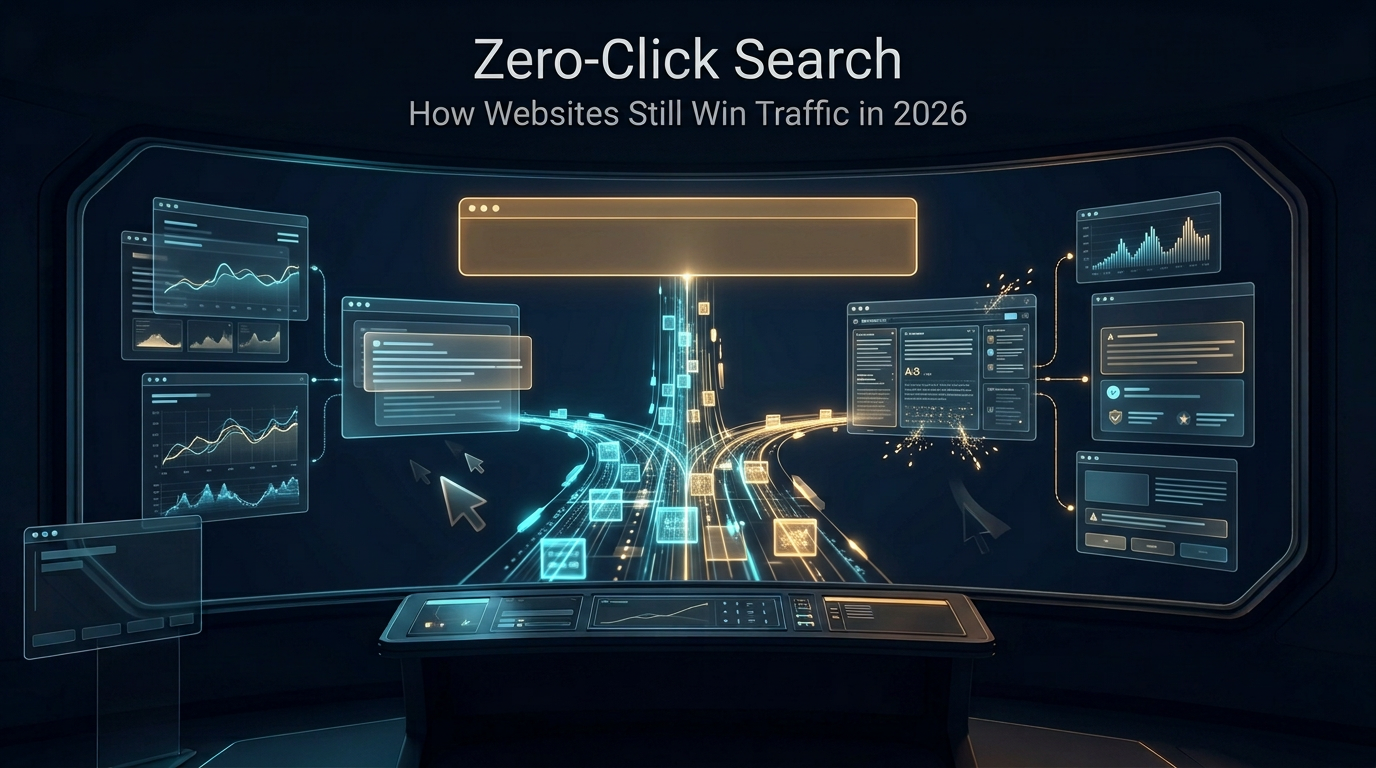
Zero Click Search is a search experience where the user gets enough information on the results page or inside an AI answer without clicking through to a website. It can happen through featured snippets, knowledge panels, Google AI Overviews, ChatGPT Search, Perplexity, Gemini, and other answer-led interfaces. Zero-click behavior does not mean SEO is dead. It means website owners must optimize for visibility, answers, citations, brand recall, and qualified traffic, not only raw clicks. Triomize helps WordPress teams measure SEO, AEO, and GEO signals together.
Table of Contents
- What Is Zero Click Search?
- Why Is Zero Click Search Growing?
- Does Zero Click Search Mean SEO Is Dead?
- How Does Zero Click Search Change SEO, AEO, and GEO?
- How Can You Optimize for Zero Click Search?
- How Do You Use Answer-First Content?
- How Does Structured Data Help?
- How Does Entity Optimization Help?
- How Do EEAT Signals Help?
- How Does Internal Linking Help?
- How Does Topical Authority Help?
- What Is AI-Friendly Formatting?
- What Are Common Zero Click Search Examples?
- How Can You Still Get Traffic from Zero Click Search?
- How Do You Measure Success Beyond Clicks?
- What Common Mistakes Do Website Owners Make?
- What Does the Future of Zero Click Search Look Like?
- How Can Triomize Help with Zero Click Search?
What Is Zero Click Search?
Zero Click Search is a search session where the user completes their task without clicking any result. The answer may appear directly in Google, inside a featured snippet, in a knowledge panel, in an AI Overview, or inside an AI-powered answer from ChatGPT, Perplexity, Gemini, or another platform.
A simple example is a user searching “what is schema markup” and reading the definition in the search result without visiting any page. Another example is a user asking ChatGPT for a software comparison and getting a summarized answer with a few citations. The user may feel satisfied before clicking a source.
Zero-click search is not new. Google has shown featured snippets, weather boxes, sports scores, calculators, maps, definitions, and knowledge panels for years. What changed in 2026 is scale. AI search tools now answer more complex questions, not only quick facts.
A zero-click result can still create value. It may increase brand awareness, earn a citation, influence a later branded search, or help a user remember your company. But it changes how success is measured. Website owners cannot focus only on sessions. They also need to track visibility, mentions, source citations, assisted conversions, and AI referrals.
This is why AI Search Optimization now matters. The goal is not only to rank. The goal is to be discovered, understood, trusted, cited, and remembered.
Why Is Zero Click Search Growing?
Zero Click Search is growing because search engines and AI platforms are answering more questions directly. Google has expanded AI Overviews and AI Mode. ChatGPT Search can retrieve and summarize live web results. Perplexity is built around source-backed answers. Gemini connects to Google’s AI ecosystem. Traditional featured snippets still answer many factual queries.
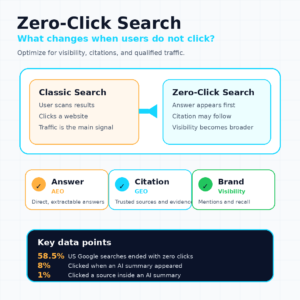
The data is significant. SparkToro’s 2024 zero-click study found that 58.5% of American Google searches and 59.7% of European Union Google searches resulted in zero clicks. SparkToro also reported that searchers ended the session entirely about 37% of the time or changed the query about 22% of the time.
AI summaries add more pressure. Pew Research Center analyzed 68,879 Google searches from 900 U.S. adults in March 2025. Pew found that when an AI summary appeared, users clicked a traditional result 8% of the time, compared with 15% when no AI summary appeared. Pew also found that users clicked a source inside the AI summary on only about 1% of visits.
Google’s AI features documentation explains that AI Overviews and AI Mode surface relevant links and may use query fan-out to issue multiple related searches across subtopics and data sources. That means AI results can include more supporting links, but users may still consume the answer before clicking.
The growth comes from five forces:
- Instant answers. Users want faster answers with less browsing.
- Richer search results. Google shows snippets, panels, maps, videos, and product data.
- AI summaries. AI tools synthesize answers from multiple sources.
- Mobile behavior. Users often need quick answers on small screens.
- Platform retention. Search and social platforms prefer keeping users inside their interface.
Zero Click Search is not a temporary trend. It is part of the shift from search results to answer experiences.
Does Zero Click Search Mean SEO Is Dead?
Zero Click Search does not mean SEO is dead. It means SEO has changed. Search visibility still matters, but clicks are no longer the only outcome worth measuring.
SEO still supports:
- Crawlability.
- Indexing.
- Page relevance.
- Internal links.
- Topical authority.
- Entity clarity.
- Structured data.
- Page experience.
- Trust signals.
- Brand discovery.
A website cannot appear in AI Overviews, ChatGPT Search, Perplexity, or Bing-powered experiences if it is technically invisible. Traditional SEO remains the foundation. Even Google’s AI features guidance says foundational SEO best practices still apply.
What is different is the path from visibility to traffic. A user may see your brand in an AI answer today, search for you tomorrow, click a citation next week, or convert through a branded query later. Attribution becomes harder, but influence still exists.
The myth is that traffic is the only value. In reality, modern search value includes:
| Outcome | Why it matters |
|---|---|
| Ranking | Users can still click standard results |
| Featured snippet | Your answer becomes the visible answer |
| AI citation | Your page becomes a supporting source |
| Brand mention | Users remember your name |
| Assisted conversion | Search exposure supports later leads |
| Direct traffic | Users visit later after seeing your brand |
| Referral traffic | AI platforms may send qualified visitors |
SEO is not dead. Low-value traffic chasing is weaker. Helpful, trusted, answer-ready content is more important than ever.
How Does Zero Click Search Change SEO, AEO, and GEO?
Zero Click Search changes SEO, AEO, and GEO by shifting the goal from only earning clicks to earning visibility, extraction, and citations. Each discipline plays a different role.
SEO earns visibility. It helps your pages get crawled, indexed, ranked, and discovered by search engines. Without SEO, your pages may not enter the candidate pool.
AEO structures answers. It makes your content easier for answer engines to extract into featured snippets, voice answers, FAQ results, and AI summaries.
GEO increases AI citations. It makes your content more trustworthy, source-backed, and entity-clear so generative systems can cite or mention it with more confidence.
| Discipline | Role in Zero Click Search | Example tactic |
|---|---|---|
| SEO | Get found and indexed | Technical SEO, internal links, Core Web Vitals |
| AEO | Become the answer | Direct definitions, FAQs, tables, concise sections |
| GEO | Become the cited source | Evidence, statistics, author clarity, entity signals |
This is why AEO vs SEO and GEO vs SEO are not separate debates. They are layers of one strategy. In a zero-click world, the strongest sites optimize for all three.
A page that ranks but cannot be summarized may lose visibility to a better-structured competitor. A page that answers well but lacks trust signals may be skipped by AI systems. A page with great data but poor crawlability may never be found.
Zero Click Search rewards complete optimization, not one tactic.
How Can You Optimize for Zero Click Search?
You can optimize for Zero Click Search by creating content that answers clearly, proves its claims, and remains useful even when the user does not click immediately. The goal is to win visibility and make the click more qualified when it happens.
How Do You Use Answer-First Content?
Answer-first content gives the user a clear response near the top of the page. It helps featured snippets, AI summaries, and answer engines understand your main point quickly.
Use this pattern:
- Start with a direct definition.
- Keep the first answer short.
- Add details after the answer.
- Use examples and tables.
- Include FAQs at the end.
For example, instead of opening with a long story about search history, start with: “Zero Click Search is a search experience where the user gets the answer without clicking a website.” That sentence is easy to extract and quote.
How Does Structured Data Help?
Structured data helps search engines and AI systems understand the type and relationships of your content. It does not guarantee a zero-click result, but it improves clarity.
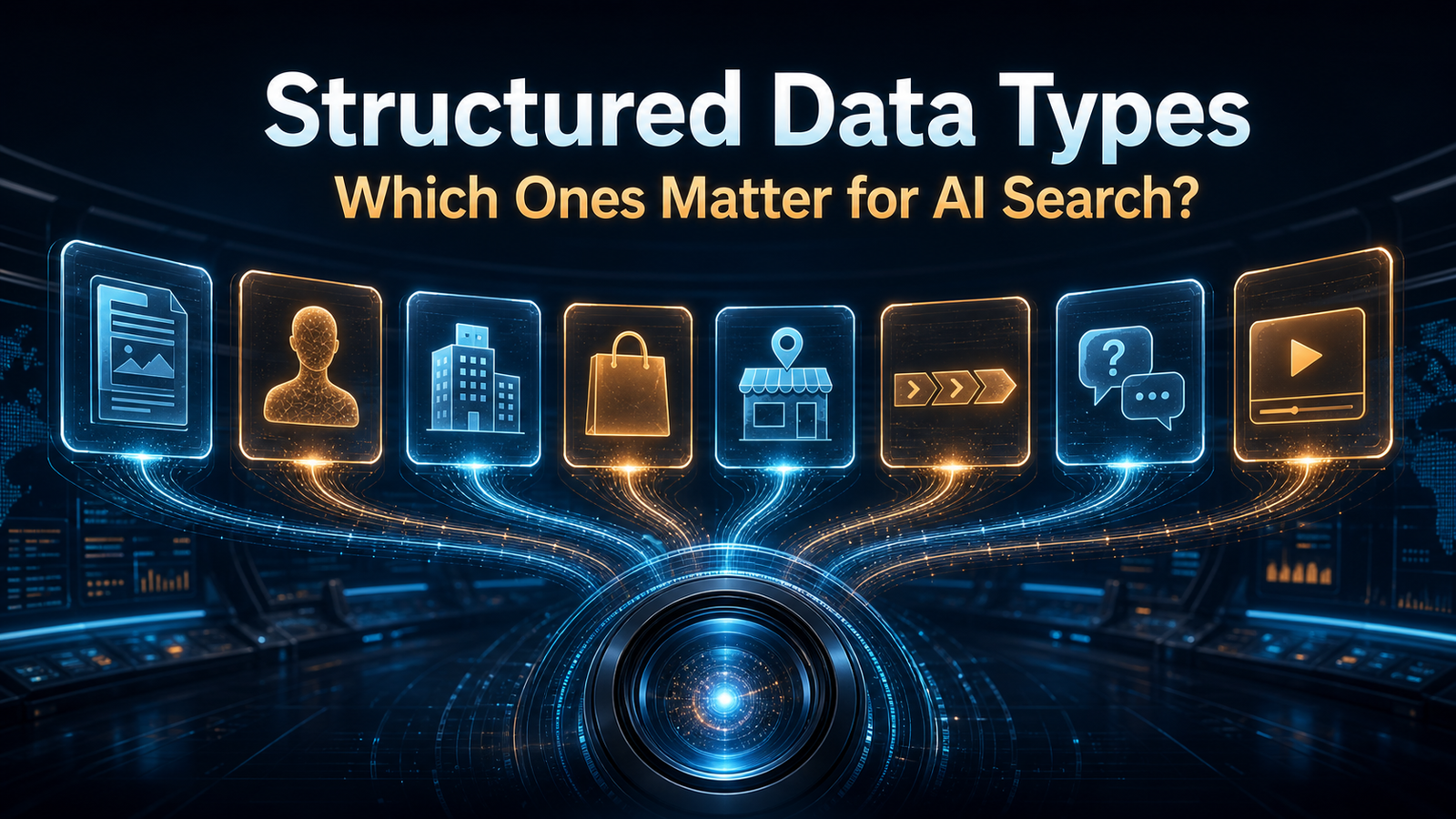
Useful schema types include:
- Article Schema.
- FAQ Schema.
- Organization Schema.
- Author Schema.
- Breadcrumb Schema.
- Product Schema where relevant.
- LocalBusiness Schema where relevant.
For a full implementation guide, read Schema Markup for AI Search.
How Does Entity Optimization Help?
Entity optimization helps search systems understand real-world people, brands, products, topics, and relationships. In zero-click and AI search, entity clarity is critical because answers are built from meaning, not only keywords.
Improve entity clarity by using:
- Consistent brand names.
- Organization schema.
- Author profiles.
- sameAs links.
- Clear product pages.
- Topic clusters.
- Descriptive internal links.
Read Entity SEO for the deeper workflow.
How Do EEAT Signals Help?
EEAT signals help search engines and AI systems decide whether your content is trustworthy. EEAT stands for Experience, Expertise, Authoritativeness, and Trustworthiness.
Add trust signals such as:
- Author details.
- Firsthand examples.
- Reliable citations.
- Updated dates.
- Transparent business information.
- Clear editorial policies.
- Secure browsing.
For AI answers, trust matters because a bad source can produce a bad answer. Learn more in EEAT for AI Search.
How Does Internal Linking Help?
Internal linking helps crawlers and users discover related pages. It also strengthens topical authority by connecting related content into clusters.
Use internal links to connect zero-click topics to deeper guides. A short answer may satisfy a quick user, but a strong internal link can guide a motivated user to a more detailed page.
Good internal links use descriptive anchor text like:
- Google AI Overviews.
- ChatGPT Search.
- Perplexity SEO.
- AI Search Ranking Factors.
- Topical Authority.
How Does Topical Authority Help?
Topical authority helps your website look like a complete source on a subject. One article may answer one question. A cluster of related articles proves deeper coverage.
A strong topic cluster includes:
- A pillar page.
- Supporting articles.
- Internal links.
- Schema markup.
- Updated examples.
- Clear entities.
- Source citations.
For a full guide, read Topical Authority.
What Is AI-Friendly Formatting?
AI-friendly formatting makes content easier to parse. It does not mean writing awkwardly for machines. It means using clean structure that helps both users and systems.
Use:
- Short paragraphs.
- Clear H2s and H3s.
- Tables.
- Bullet lists.
- Numbered steps.
- Definitions.
- FAQs.
- Descriptive image alt text.
This also supports AI Search Ranking Factors because content structure, entity clarity, and trust are all part of AI visibility.
What Are Common Zero Click Search Examples?
Common Zero Click Search examples include any search result or AI answer that solves the user’s question before a website visit happens. These examples existed before AI, but AI-powered search has made them broader and more conversational.
Typical examples include:
- Featured snippets. Google extracts a short answer from a page and displays it above standard results.
- Knowledge panels. Google summarizes facts about a person, company, place, or concept.
- Local packs. Users see maps, ratings, hours, and phone numbers without opening a website.
- Weather and sports results. Google answers the query directly with live data.
- Calculators and converters. Users solve quick tasks inside the results page.
- Google AI Overviews. AI summarizes a complex topic and links to supporting sources.
- ChatGPT Search answers. ChatGPT gives a synthesized answer with citations or source links.
- Perplexity answers. Perplexity responds with a source-backed answer and footnote-style citations.
Each example changes the role of the website. The page may still influence the answer, but the user may not click immediately. That is why Zero Click Search requires a broader strategy than keyword rankings alone.
For content teams, the best response is not to avoid direct answers. The best response is to provide the clearest answer, then offer deeper value that the search result cannot fully replace.
How Can You Still Get Traffic from Zero Click Search?
You can still get traffic from Zero Click Search by making your content valuable beyond the short answer. The quick answer may satisfy some users, but others still need details, tools, examples, templates, products, or expert help.
Use these tactics:
- Answer the basic question directly. Earn the snippet or AI summary opportunity.
- Offer deeper value below the answer. Add examples, workflows, screenshots, and templates.
- Build branded recall. Make your brand visible and consistent.
- Create original data. AI systems and users still need primary sources.
- Use comparison tables. Complex decisions often require clicks.
- Target commercial investigation queries. Users still click when choosing tools, products, or services.
- Add interactive or downloadable assets. Checklists, calculators, and templates can motivate visits.
- Strengthen internal links. Move users from quick answers to deeper resources.
- Optimize for citations. A cited source can still earn high-intent traffic.
- Track assisted conversions. Some zero-click exposure converts later.
Zero-click traffic is often lower in volume but higher in intent when the click happens. A user who clicks from an AI citation may already trust the source enough to investigate further.
The goal is not to hide the answer. Hiding the answer makes your content less useful. The goal is to answer quickly and then give users a reason to continue.
How Do You Measure Success Beyond Clicks?
You measure success beyond clicks by tracking visibility, citations, mentions, referral traffic, and assisted conversions. Zero Click Search requires broader measurement than sessions alone.
Useful metrics include:
- Featured snippet ownership.
- Google AI Overview appearances where visible.
- Perplexity citations.
- ChatGPT Search citations.
- AI referral traffic.
- Brand mentions in AI answers.
- Branded search growth.
- Direct traffic increases.
- Assisted conversions.
- Newsletter signups.
- Return visitors.
- Search Console impressions.
- Topic cluster growth.
A page may lose some traditional clicks but still gain visibility. For example, a guide may appear in an AI answer, generate brand awareness, and later drive branded searches. Analytics may not attribute that perfectly.
This is why AI Visibility is a better measurement concept than traffic alone. It includes discoverability, citations, source mentions, and AI referrals.
Use a monthly dashboard with four categories:
| Category | What to measure |
|---|---|
| Search visibility | Impressions, rankings, snippets, AI Overviews |
| AI visibility | Citations, mentions, AI referrals |
| Engagement | Time on page, returning users, downloads |
| Business impact | Leads, trials, assisted conversions, branded search |
Zero Click Search makes attribution harder, but not impossible. You need more signals.
What Common Mistakes Do Website Owners Make?
Common mistakes in Zero Click Search happen when website owners either give up on SEO or chase shortcuts. Both approaches are risky.
Avoid these mistakes:
- Hiding the answer. Users and AI systems prefer direct answers.
- Assuming clicks are the only value. Visibility can influence later demand.
- Ignoring AI citations. Citations are a new trust and traffic path.
- Skipping structured data. Schema helps machines understand pages.
- Publishing thin content. Generic pages are easy to replace with summaries.
- Neglecting internal links. Isolated posts do not build authority.
- Forgetting brand visibility. Zero-click exposure still builds memory.
- Not updating content. AI search topics change quickly.
- Blocking useful crawlers. Review AI crawler policies before blocking everything.
- Measuring only last-click traffic. Assisted discovery matters.
The biggest mistake is treating Zero Click Search as a reason to stop publishing. In reality, useful content becomes even more important. The format has changed, not the need for trustworthy sources.
What Does the Future of Zero Click Search Look Like?
The future of Zero Click Search will likely include more AI summaries, more source citations, more interactive answers, and more blended search experiences. Classic search results will not disappear, but users will expect faster answers.
Expect growth in:
- Google AI Overviews.
- Google AI Mode.
- ChatGPT Search.
- Perplexity citations.
- Gemini answer experiences.
- Bing Copilot search.
- Voice answers.
- Multimodal search.
- Agentic browsing.
- AI-assisted shopping and research.
This future rewards websites that can serve two needs at once. First, the page must provide a clear, extractable answer. Second, it must offer enough depth, trust, and usefulness to justify the click.
Search will not become clickless for every query. Complex decisions, purchases, comparisons, research, tools, downloads, and trust-sensitive topics still need deeper engagement. But simple informational queries will keep moving toward instant answers.
Website owners should respond by building assets that AI cannot fully replace:
- Original research.
- Expert analysis.
- Tools and templates.
- Firsthand examples.
- Product experiences.
- Community insights.
- Detailed comparisons.
- Strong brand trust.
Zero Click Search is not the end of website traffic. It is a signal that the rules have changed.
How Can Triomize Help with Zero Click Search?
Triomize can help with Zero Click Search by helping WordPress teams optimize for SEO, AEO, and GEO together. That matters because zero-click visibility depends on ranking, answer extraction, and AI citation readiness.
Triomize helps website owners review:
- SEO fundamentals.
- Answer-first structure.
- FAQ quality.
- Schema opportunities.
- Internal links.
- Brand mentions.
- GEO trust signals.
- AI crawler access.
- Content freshness.
- Technical issues.
Zero Click Search does not mean the end of website traffic. It means the rules have changed. Triomize helps you optimize your website for SEO, AEO, and GEO so your content remains visible across Google Search, AI Overviews, ChatGPT, Perplexity, and other AI-powered search platforms.
No tool can guarantee clicks or citations. But the right workflow can make your content easier to find, understand, trust, and cite.
Frequently Asked Questions
What is zero-click search?
Does zero-click search hurt SEO?
How can I optimize for zero-click search?
Why are Google searches becoming zero-click?
Can websites still get traffic from AI search?
Is zero-click search the future?
How does AI search affect website traffic?