
,

GEO vs SEO: What’s the Difference and Why You Need Both in 2026?

3D illustration of a search funnel pyramid showing GEO vs SEO, where foundational SEO forms the wide digital base and Generative Engine Optimization (GEO) sits at the top glowing AI citation layer.

The main difference between GEO vs SEO is that Search Engine Optimization focuses on ranking web pages in traditional search engine results to capture organic link clicks, while Generative Engine Optimization focuses on earning direct brand citations and footnotes inside AI-generated answers from platforms like ChatGPT, Perplexity, and Google AI Overviews.

Modern websites need both in 2026 because SEO establishes foundational domain trust and indexing, while GEO structures original empirical statistics, direct definitions, and entity relationships so large language models can extract and recommend your content.


GEO vs SEO: what is the actual difference?

GEO vs SEO is one of the most critical search strategy shifts facing digital brands this year. Search Engine Optimization is the practice of ranking web pages in traditional blue link results. Generative Engine Optimization is the practice of structuring content so AI search platforms pull your empirical facts and display your brand as a cited source. Both disciplines are essential in 2026, and you cannot succeed at GEO without a strong SEO foundation.

The GEO vs SEO shift is driven by massive changes in user behavior. According to SparkToro’s 2024 zero-click search study, 58.5% of Google queries now end without a click. Furthermore, Gartner research projects traditional search engine volume will drop by 25% over the next two years as searchers turn to generative answer engines. That gap between traditional rankings and AI citations is what GEO exists to close.

If you believe GEO is replacing SEO, you are falling for an industry myth. Generative Engine Optimization sits directly on top of Search Engine Optimization. Large language models and AI crawlers rely on the exact same web index traditional search engines build. If Google or Bing cannot crawl and index your page, AI tools like ChatGPT and Perplexity will never find it or cite it. This is why the Triomize plugin scores your content across three independent 100-point matrices for SEO, AEO, and GEO simultaneously inside WordPress.

This guide breaks down what Search Engine Optimization and Generative Engine Optimization actually mean, how their ranking signals differ, why they depend on each other, and practical steps to optimize for both engines today.


What is SEO (Search Engine Optimization) in 2026?

Search Engine Optimization is the discipline of improving website pages so they rank highly on traditional search engines like Google and Bing. For nearly three decades, SEO has served as the primary growth engine for digital websites, and it still drives over half of all trackable web traffic according to BrightEdge research.

The core SEO ranking signals in 2026 remain grounded in domain authority and technical access:

  1. Topical relevance and keyword placement. Your headers and body text must clearly map to user search intent.
  2. Authoritative backlinks. High-quality external websites linking to your domain remain Google’s primary trust metric.
  3. Technical infrastructure. Clean sitemaps, fast server response times, and strong Core Web Vitals scores.
  4. Helpful content depth. Search algorithms reward pages that provide thorough, accurate explanations.
  5. Entity schema architecture. Structured data clarifies exactly what entity your page represents.

SEO is the bedrock of multi-engine discoverability. If your technical SEO is broken, AI answer engines cannot verify your domain credibility. Using content intelligence tools like Triomize allows marketing teams to verify all 23 foundational SEO checks directly inside the post editor before publishing.


What is GEO (Generative Engine Optimization) and how does it work?

Generative Engine Optimization is the practice of optimizing digital content so that artificial intelligence search engines synthesize, quote, and cite your brand inside generated answers. Rather than showing ten blue hyperlinks, answer engines read dozens of web documents in real time and generate a consolidated response with inline footnote citations.

Key platforms driving generative search include:

  • ChatGPT with Search: OpenAI’s live browsing engine that cites web domains inside conversational responses.
  • Google AI Overviews: Generative summaries appearing above organic search results on nearly 50% of desktop queries.
  • Perplexity AI: An AI-native answer engine designed to provide footnote-linked research summaries.
  • Gemini and Claude: Advanced language models that rely on factual consensus across trusted web entities.

To win citations in these generative interfaces, your content must satisfy specific GEO signals:

  • Empirical statistics and original data. Proprietary benchmarks and cited research are the single strongest triggers for AI inclusion.
  • Direct answer-first structures. Clear definition sentences placed at the top of every section.
  • Clean modular formatting. Comparison tables, numbered steps, and bulleted lists that AI parsers can easily extract.
  • Entity clarity and external citations. Linking out to university studies or official documentation proves factual accuracy.
  • Unblocked AI crawlers. Server rules permitting bots like GPTBot and PerplexityBot to read your pages.

If SEO focuses on being ranked, GEO focuses on being cited and recommended.


GEO vs SEO: how do core ranking signals differ?
The main difference between GEO vs SEO is that Search Engine Optimization focuses on ranking web pages in traditional search engine results to capture organic link clicks, while Generative Engine Optimization focuses on earning direct brand citations and footnotes inside AI-generated answers from platforms like ChatGPT, Perplexity, and Google AI Overviews.Table of Contents GEO vs SEO: what is the actual difference? What is SEO (Search Engine Optimization) in 2026? What is GEO (Generative Engine Optimization) and how does it work? GEO vs SEO: how do core ranking signals differ? Why do modern websites need both SEO and GEO in 2026? How can you optimize your website for GEO and SEO simultaneously? The unified GEO + SEO optimization checklist Modern websites need both in 2026 because SEO establishes foundational domain trust and indexing, while GEO structures original empirical statistics, direct definitions, and entity relationships so large language models can extract and recommend your content. GEO vs SEO: what is the actual difference? GEO vs SEO is one of the most critical search strategy shifts facing digital brands this year. Search Engine Optimization is the practice of ranking web pages in traditional blue link results. Generative Engine Optimization is the practice of structuring content so AI search platforms pull your empirical facts and display your brand as a cited source. Both disciplines are essential in 2026, and you cannot succeed at GEO without a strong SEO foundation. The GEO vs SEO shift is driven by massive changes in user behavior. According to SparkToro's 2024 zero-click search study, 58.5% of Google queries now end without a click. Furthermore, Gartner research projects traditional search engine volume will drop by 25% over the next two years as searchers turn to generative answer engines. That gap between traditional rankings and AI citations is what GEO exists to close. If you believe GEO is replacing SEO, you are falling for an industry myth. Generative Engine Optimization sits directly on top of Search Engine Optimization. Large language models and AI crawlers rely on the exact same web index traditional search engines build. If Google or Bing cannot crawl and index your page, AI tools like ChatGPT and Perplexity will never find it or cite it. This is why the Triomize plugin scores your content across three independent 100-point matrices for SEO, AEO, and GEO simultaneously inside WordPress. This guide breaks down what Search Engine Optimization and Generative Engine Optimization actually mean, how their ranking signals differ, why they depend on each other, and practical steps to optimize for both engines today. What is SEO (Search Engine Optimization) in 2026? Search Engine Optimization is the discipline of improving website pages so they rank highly on traditional search engines like Google and Bing. For nearly three decades, SEO has served as the primary growth engine for digital websites, and it still drives over half of all trackable web traffic according to BrightEdge research. The core SEO ranking signals in 2026 remain grounded in domain authority and technical access: Topical relevance and keyword placement. Your headers and body text must clearly map to user search intent. Authoritative backlinks. High-quality external websites linking to your domain remain Google's primary trust metric. Technical infrastructure. Clean sitemaps, fast server response times, and strong Core Web Vitals scores. Helpful content depth. Search algorithms reward pages that provide thorough, accurate explanations. Entity schema architecture. Structured data clarifies exactly what entity your page represents. SEO is the bedrock of multi-engine discoverability. If your technical SEO is broken, AI answer engines cannot verify your domain credibility. Using content intelligence tools like Triomize allows marketing teams to verify all 23 foundational SEO checks directly inside the post editor before publishing. What is GEO (Generative Engine Optimization) and how does it work? Generative Engine Optimization is the practice of optimizing digital content so that artificial intelligence search engines synthesize, quote, and cite your brand inside generated answers. Rather than showing ten blue hyperlinks, answer engines read dozens of web documents in real time and generate a consolidated response with inline footnote citations. Key platforms driving generative search include: ChatGPT with Search: OpenAI's live browsing engine that cites web domains inside conversational responses. Google AI Overviews: Generative summaries appearing above organic search results on nearly 50% of desktop queries. Perplexity AI: An AI-native answer engine designed to provide footnote-linked research summaries. Gemini and Claude: Advanced language models that rely on factual consensus across trusted web entities. To win citations in these generative interfaces, your content must satisfy specific GEO signals: Empirical statistics and original data. Proprietary benchmarks and cited research are the single strongest triggers for AI inclusion. Direct answer-first structures. Clear definition sentences placed at the top of every section. Clean modular formatting. Comparison tables, numbered steps, and bulleted lists that AI parsers can easily extract. Entity clarity and external citations. Linking out to university studies or official documentation proves factual accuracy. Unblocked AI crawlers. Server rules permitting bots like GPTBot and PerplexityBot to read your pages. If SEO focuses on being ranked, GEO focuses on being cited and recommended. GEO vs SEO: how do core ranking signals differ? While both strategies aim to connect audiences with valuable answers, they evaluate web content differently. Traditional search engines score pages based on historical link equity and keyword prominence. AI engines score pages based on factual density, entity consensus, and sentence structure. Research conducted by researchers at Princeton University and IIT Delhi proved that Generative Engine Optimization relies heavily on empirical evidence and authoritative quotes. Their study revealed that adding original statistical data and expert citations increased AI recommendation rates by up to 40% across generative search benchmarks. Here is a side-by-side comparison illustrating how Search Engine Optimization and Generative Engine Optimization diverge: Comparison Factor Traditional SEO Generative Engine Optimization (GEO) Primary Goal Rank web pages in traditional organic search results Earn brand citations and footnotes inside AI answers Target Platforms Google Search, Bing, Yahoo blue links ChatGPT, Perplexity AI, Google AI Overviews, Gemini Core Ranking Signals Backlinks, keyword density, technical site speed Original statistics, entity relationships, structured data User Experience Scrolling a list of hyperlinks and clicking through pages Reading a synthesized answer with inline source links Success Metrics Organic session volume, keyword ranking positions AI citation frequency, share of voice, brand sentiment Content Structure Long-form articles optimized around topical keyword clusters Direct answer blocks, comparison tables, modular lists Dependency Standalone foundational search layer Depends completely on underlying technical SEO Notice the bottom row. GEO inherits your crawlability and domain trust directly from SEO. Why do modern websites need both SEO and GEO in 2026? Treating SEO and GEO as competing strategies leaves major gaps in your marketing funnel. In 2026, search is a hybrid experience. A user might discover your brand through a Google AI Overview summary, verify your reputation via traditional search rankings, and ask ChatGPT for pricing comparisons. When an AI summary appears in Google search results, traditional link clicks drop by roughly 47% according to Pew Research Center findings. Websites that ignore Generative Engine Optimization lose visibility on simple zero-click queries. At the same time, large language models verify facts by checking consensus across top-ranking web pages. A 2024 study across 10,000 AI-cited URLs showed that 68% of sources featured in Google AI Overviews also ranked in the traditional top ten organic search results. If you abandon traditional SEO, your page falls out of the index, and your AI citations vanish with it. This stacking dependency explains why Triomize scores SEO, AEO, and GEO independently rather than merging them into one metric. To understand how AEO (Answer Engine Optimization) fits between traditional search and generative search, review our complete guide to SEO vs AEO vs GEO. Furthermore, you can explore detailed tactics for generative engines in our breakdown of GEO in 2026. How can you optimize your website for GEO and SEO simultaneously? You do not need separate teams creating isolated content for AI and search engines. Instead, build a unified workflow that scores high on every matrix at once. By combining actionable empirical data with clean technical formatting, you ensure your posts win both blue links and AI footnotes. Instead of guessing whether your article is extractable by AI parsers, you can rely on the live Triomize scoring matrix inside WordPress to verify every core signal. The unified GEO + SEO optimization checklist  Open your post with a direct definition answering the topic query within the first 100 words.  Put your exact focus keyword in the title, URL slug, and at least two subheadings.  Structure H2 and H3 headings as exact user questions or tight topic statements.  Publish original empirical data, survey percentages, or verified research metrics.  Cite authoritative external sources and link out to recognized industry benchmarks.  Build clean comparison tables and numbered step-by-step lists for modular extraction.  Keep average sentence length under 20 words to prevent LLM summarization errors.  Check your robots.txt file to ensure GPTBot, ClaudeBot, and PerplexityBot are allowed.  Implement structured Article, Organization, and FAQPage schema markup.  Update core articles annually to signal factual freshness to real-time AI crawlers.
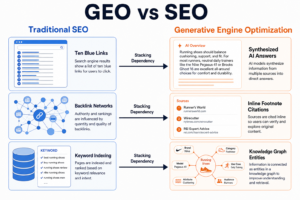
GEO vs SEO Core Differences: How traditional keyword indexing and backlink networks feed directly into AI Overviews and entity citations.


While both strategies aim to connect audiences with valuable answers, they evaluate web content differently. Traditional search engines score pages based on historical link equity and keyword prominence. AI engines score pages based on factual density, entity consensus, and sentence structure.

Research conducted by researchers at Princeton University and IIT Delhi proved that Generative Engine Optimization relies heavily on empirical evidence and authoritative quotes. Their study revealed that adding original statistical data and expert citations increased AI recommendation rates by up to 40% across generative search benchmarks.

Here is a side-by-side comparison illustrating how Search Engine Optimization and Generative Engine Optimization diverge:

Comparison Factor Traditional SEO Generative Engine Optimization (GEO)
Primary Goal Rank web pages in traditional organic search results Earn brand citations and footnotes inside AI answers
Target Platforms Google Search, Bing, Yahoo blue links ChatGPT, Perplexity AI, Google AI Overviews, Gemini
Core Ranking Signals Backlinks, keyword density, technical site speed Original statistics, entity relationships, structured data
User Experience Scrolling a list of hyperlinks and clicking through pages Reading a synthesized answer with inline source links
Success Metrics Organic session volume, keyword ranking positions AI citation frequency, share of voice, brand sentiment
Content Structure Long-form articles optimized around topical keyword clusters Direct answer blocks, comparison tables, modular lists
Dependency Standalone foundational search layer Depends completely on underlying technical SEO

Notice the bottom row. GEO inherits your crawlability and domain trust directly from SEO.


Why do modern websites need both SEO and GEO in 2026?

Treating SEO and GEO as competing strategies leaves major gaps in your marketing funnel. In 2026, search is a hybrid experience. A user might discover your brand through a Google AI Overview summary, verify your reputation via traditional search rankings, and ask ChatGPT for pricing comparisons.

When an AI summary appears in Google search results, traditional link clicks drop by roughly 47% according to Pew Research Center findings. Websites that ignore Generative Engine Optimization lose visibility on simple zero-click queries.

At the same time, large language models verify facts by checking consensus across top-ranking web pages. A 2024 study across 10,000 AI-cited URLs showed that 68% of sources featured in Google AI Overviews also ranked in the traditional top ten organic search results. If you abandon traditional SEO, your page falls out of the index, and your AI citations vanish with it. This stacking dependency explains why Triomize scores SEO, AEO, and GEO independently rather than merging them into one metric.

To understand how AEO (Answer Engine Optimization) fits between traditional search and generative search, review our complete guide to SEO vs AEO vs GEO. Furthermore, you can explore detailed tactics for generative engines in our breakdown of GEO in 2026.


How can you optimize your website for GEO and SEO simultaneously?

You do not need separate teams creating isolated content for AI and search engines. Instead, build a unified workflow that scores high on every matrix at once. By combining actionable empirical data with clean technical formatting, you ensure your posts win both blue links and AI footnotes. Instead of guessing whether your article is extractable by AI parsers, you can rely on the live Triomize scoring matrix inside WordPress to verify every core signal.

The unified GEO + SEO optimization checklist

  •  Open your post with a direct definition answering the topic query within the first 100 words.
  •  Put your exact focus keyword in the title, URL slug, and at least two subheadings.
  •  Structure H2 and H3 headings as exact user questions or tight topic statements.
  •  Publish original empirical data, survey percentages, or verified research metrics.
  •  Cite authoritative external sources and link out to recognized industry benchmarks.
  •  Build clean comparison tables and numbered step-by-step lists for modular extraction.
  •  Keep average sentence length under 20 words to prevent LLM summarization errors.
  •  Check your robots.txt file to ensure GPTBotClaudeBot, and PerplexityBot are allowed.
  •  Implement structured Article, Organization, and FAQPage schema markup.
  •  Update core articles annually to signal factual freshness to real-time AI crawlers.

Frequently Asked Questions

What is the main difference between GEO vs SEO?
The main difference is that SEO focuses on ranking web pages in traditional search engine results to capture organic link clicks, while GEO focuses on earning direct brand citations and footnotes inside AI-generated answers from tools like ChatGPT and Perplexity.
Does Generative Engine Optimization replace traditional SEO?
No, GEO does not replace traditional SEO. Generative AI search engines pull their candidate facts from the same crawlable web index built by traditional search. Without technical SEO and domain indexing, AI engines cannot discover or trust your website.
How does Generative Engine Optimization increase AI citations?
GEO increases citations by structuring content with empirical statistics, direct definition sentences, comparison tables, and authoritative external links. These exact signals make it easy for large language models to verify your facts and credit your brand during answer synthesis.
Which technical crawler settings affect GEO discoverability?
AI answer engines rely on web crawlers to read your latest pages. You must verify that your server permissions and robots.txt file allow user agents like GPTBot, PerplexityBot, ClaudeBot, and Google-Extended to crawl your domain.
How do I measure GEO success compared to SEO?

While traditional SEO is measured by keyword positions and organic session clicks, GEO success is measured by AI citation frequency, brand mention share of voice inside LLM responses, and direct referral traffic from conversational answer engines.
Arijit BoseFounder

For 14 years, I have helped brands dominate traditional search engines. Today, the landscape is shifting from blue links to AI answers. As an early adopter of Answer Engine Optimization (AEO) and Generative Engine Optimization (GEO), I bridge the gap between traditional SEO and conversational AI.I specialize in future-proofing enterprise search visibility. By auditing brand entities, building topical authority, and optimizing structured data, I ensure your business is the primary source cited by ChatGPT, Google Gemini, and Perplexity.